Project Management
Renovation variations in Italy: how to control cost and programme
A renovation variation should not appear on an invoice before it has been described, priced and approved. To keep an Italian renovation under control, record why the change is needed, compare it with the design and contract, measure its effect on cost and programme, and obtain written approval before work starts, except for genuine safety emergencies.
Renovating a villa or farmhouse involves real uncertainty. Opening a wall or roof can reveal conditions that could not be fully read before construction. This does not mean that every extra is unavoidable or that the client must accept an unexplained figure. A clear variation process distinguishes a documented discovery from a late client decision or an item omitted from the original scope.
This is an operational guide. It is not a substitute for legal review of the contract or for decisions by the appointed designer and site director.
What is a renovation variation?
A variation is a change to agreed drawings, specifications, quantities or methods. It may affect geometry, materials, building services, work items, quantities, sequence or execution conditions. Variations have different causes, and identifying the cause is the first step towards understanding responsibility and consequences.
Common working categories include:
- client-requested change: a previously defined choice, layout or finish is changed;
- change required by a discovered condition: the building reveals material facts that must be investigated;
- design or approval change: the project must respond to a technical or administrative requirement;
- contractor or supplier substitution: an item is unavailable or an alternative is proposed;
- correction of an omission: necessary work was not drawn, specified or measured.
The category does not by itself decide who pays. It provides a route back to the contract, design duties and site evidence.
Variation control begins before work starts
The least expensive variation is the one resolved during design. A coordinated set of information reduces the gap between what the client imagines and what the contractor has priced.
Before mobilisation, the team should align:
- architectural, structural and building-services information;
- specifications covering materials, performance and installation;
- quantities and prices appropriate to the design stage;
- exclusions, client-supplied items and provisional allowances;
- programme dependencies between decisions, orders and work;
- the contractual route for requesting, evaluating and authorising change;
- approval thresholds and delegated authority, especially for an overseas client.
A short quotation may suit simple work. For a complex farmhouse, phrases such as “complete system” or “premium finishes” do not allow anyone to distinguish a genuine variation from an original ambiguity.
For contractor selection, see How to find a reliable contractor in Italy.
The variation record: seven facts before approval
Each change should be understandable without reconstructing weeks of messages. A concise record includes:
- sequential number and request date;
- origin and reason, supported by photographs or surveys where needed;
- reference to the drawing, specification, bill item and contract;
- proposed solution and alternatives considered;
- cost difference, showing quantities, rates and omitted work as well as additions;
- effect on the programme, existing orders and connected activities;
- approval, rejection or request for revision, with date and responsible party.
The cost is not only the price of the new item. It may include omitted work, completed work that must be undone, non-returnable materials, disruption, redesign and consequences for other trades. Those parts should be visible rather than compressed into one unexamined sum.
A hypothetical example of a proper comparison
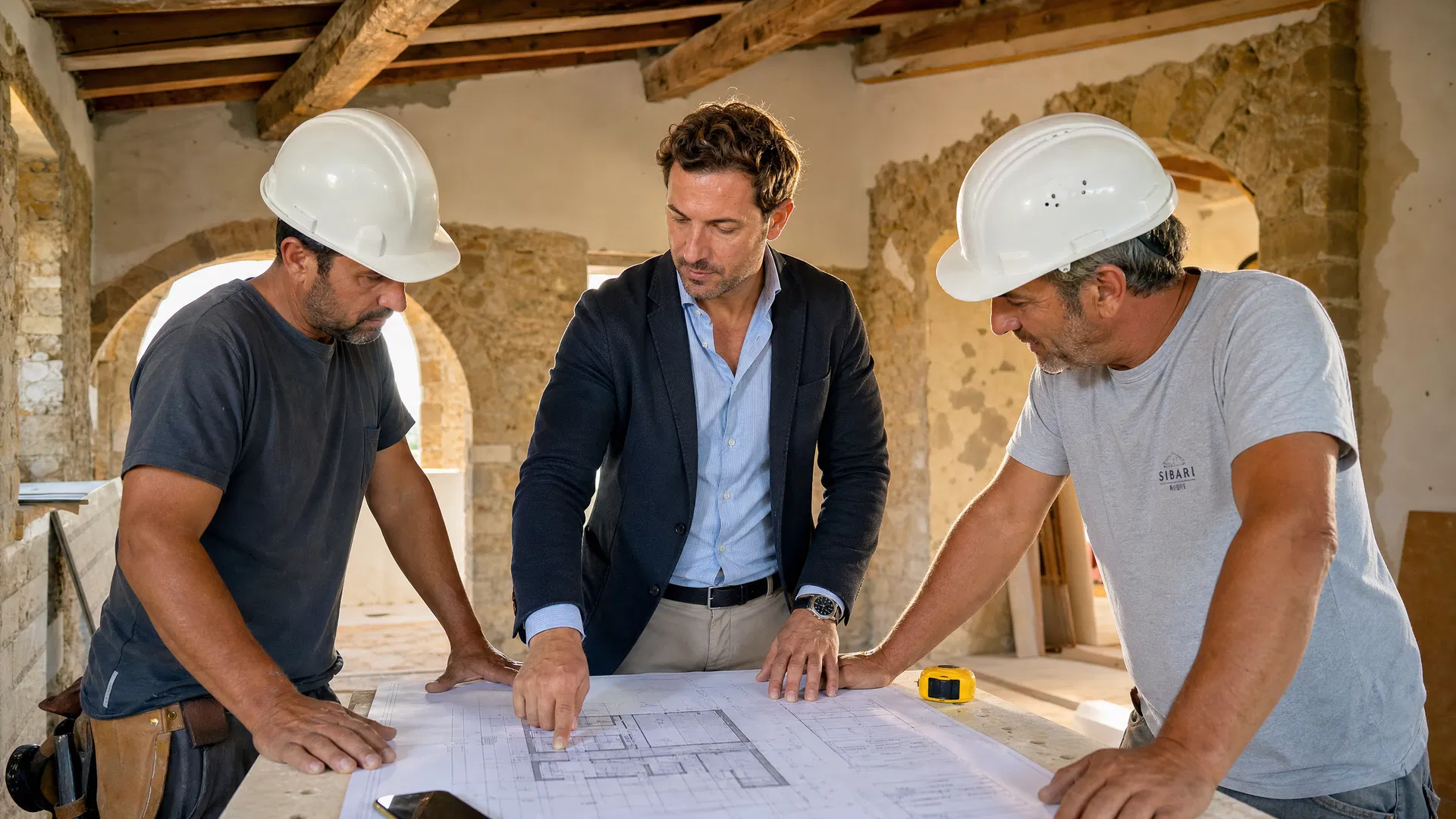
After a finish is removed, the underlying wall differs from the recorded assumption. The contractor proposes additional work. Before approval, the site director records the condition, the designer defines the technical response and the cost comparison shows:
- planned quantity no longer required;
- new measurable quantity;
- unit rate or basis for a new rate;
- ancillary work;
- additional or recoverable days;
- effect on services and finishes already programmed.
The client should not choose between a blind yes and no. The decision should compare solution, consequence and alternatives. This example describes a method; actual work and responsibility are case-specific.
Approve before executing
No ordinary variation should proceed without written approval. A message can raise the issue, but the decision should enter the project record. Updated drawings, commercial value and programme impact need to refer to the same version.
In Italian private works contracts, project changes are addressed, among other provisions, by Articles 1659, 1660 and 1661 of the Civil Code. Their application depends on the contract, cause and facts. A general rule should not be turned into an automatic answer about entitlement to additional payment.
Emergencies and safety work
If an immediate risk emerges, protecting people and the building comes first. Even then, the team should promptly record the condition, technical decision, authorised activity and estimated cost or measurement basis. “It was urgent” should not become a generic explanation delivered at the end of the project.
A commercial variation must also be distinguished from a change to the building authorisation. Site changes may require a different administrative procedure or may not be permissible. The appointed professionals and municipality determine this; client approval does not replace any required authorisation.
Update both budget and programme
The variation register should show at least:
- original contract budget;
- approved additions and omissions;
- requests still under review;
- updated forecast at completion.
The programme needs the same discipline: baseline dates, approved time effects, open risks and current forecast. Keeping requests separate from approvals prevents an idea from becoming committed expenditure without a decision.
The commercial comparison must also include omissions. If a finish is replaced, the value of the original supply not required should be deducted, subject to documented orders already placed or genuinely unrecoverable costs.
Decisions for an overseas client
Distance makes a simple structure more valuable. The client should receive a short record, oriented photographs, an understandable drawing, options, cost and decision deadline. A regular review of open variations is more effective than continuous messages with no status.
Clarify:
- who may approve and up to what limit;
- which channel constitutes formal approval;
- which decisions require samples or a visit;
- what happens when a response arrives after the required date;
- how documents and versions are stored.
For the wider process, read Managing your Italian renovation from abroad.
Warning signs
- extras are reported only after the work is complete;
- figures have no quantities, rates or contract reference;
- approvals are scattered across messages, calls and inconsistent drawings;
- omitted work is never credited;
- completion dates are not updated;
- every issue is called “unforeseen”;
- materials are substituted without technical review or sample approval;
- progress valuations include unapproved variations.
One warning sign does not automatically prove wrongdoing. It does show that the records are not giving the client enough control to make an informed decision.
Checklist before authorising a variation
- Is the cause described and evidenced?
- Is the baseline drawing, specification or bill item clear?
- Has the designer or site director validated the technical solution?
- Are practical alternatives shown?
- Does the delta include additions, omissions and unrecoverable costs?
- Is the time effect stated?
- Have approvals and design updates been checked?
- Is the decision recorded before execution?
- Will budget, programme and drawings share the same revision?
Conclusion
Variations are not controlled by pretending renovation contains no uncertainty. They are controlled by making each change traceable before it becomes completed work and irreversible cost. Coordinated design, a readable contract, a variation record and an updated forecast let everyone discuss evidence rather than reconstruct intentions at the end.
The existing call to action on this page can be used to request a discussion with MANINI Restorations about project-management method. No project estimate can be given without documents, survey information and a defined scope.
Primary sources consulted
- Italian Civil Code, Royal Decree 16 March 1942 no. 262, Articles 1659–1661 — Normattiva, accessed 2 September 2026.
- Presidential Decree 6 June 2001 no. 380 — Building Consolidated Act, accessed 2 September 2026.
- Decree-Law 29 May 2024 no. 69 — building provisions, accessed 2 September 2026.
Note: planning requirements and financial entitlements depend on the specific project, authorisation and contract. Before final publication, the text should be reviewed by the professionals responsible for the project and, for legal matters, by a qualified adviser.