Buying Property

Due Diligence When Buying a Property to Renovate in Tuscany: The Complete Checklist

Leopoldo Manini - Founder MANINI® — — 19 min read

Due Diligence When Buying a Property to Renovate in Tuscany: The Complete Checklist

Introduction

Technical due diligence is the verification process that every buyer should carry out before signing a purchase contract for a property to renovate. In Italy, where the building history of properties is often complex and documentation fragmented, this step is even more critical.

This article provides a complete checklist of all necessary checks, explaining what to look for, where to find information and what the warning signs are. If you want to understand typical renovation costs, read our cost guide.

Why due diligence is essential in Italy

Unlike other countries, in Italy:

  • The seller is not obliged to declare all defects. The responsibility to verify falls on the buyer.
  • Building violations don't expire with change of ownership. If you buy a property with violations, you become responsible for them.
  • Planning and cadastral compliance is a requirement for completion. If discrepancies emerge, the notary can refuse to complete.
  • Landscape restrictions can drastically limit possible interventions. You might discover that your planned project isn't feasible.

Due diligence isn't optional: it's your only protection against risks that can cost tens of thousands of euros.

Phase 1: Documentary checks

Cadastral survey and floor plan

The cadastral survey identifies the property in the Catasto system and indicates its category, rateable value and ownership. The cadastral floor plan shows the internal distribution of spaces.

What to check:

  • Does the cadastral ownership match the seller?
  • Does the floor plan match the property's actual state?
  • Is the cadastral category consistent with current and intended use?
  • Are there undeclared parcels or sub-units?

Where to find information: Agenzia delle Entrate (online survey or at the territorial office).

Warning signs: outdated floor plan, incongruent category (e.g., C/2 - warehouse for a property used as residence), ownership different from seller.

The mortgage search reveals whether the property has mortgages, seizures, sequestrations or other encumbrances limiting free disposal.

What to check:

  • Are there active voluntary mortgages (loans)?
  • Are there judicial mortgages (owner's debts)?
  • Are there prejudicial registrations (seizures, sequestrations)?
  • Is the chain of ownership transfers regular?

Where to find information: Land Registry (Conservatoria dei Registri Immobiliari).

Warning signs: judicial mortgages, ongoing seizures, breaks in the ownership chain.

Building permits and planning compliance

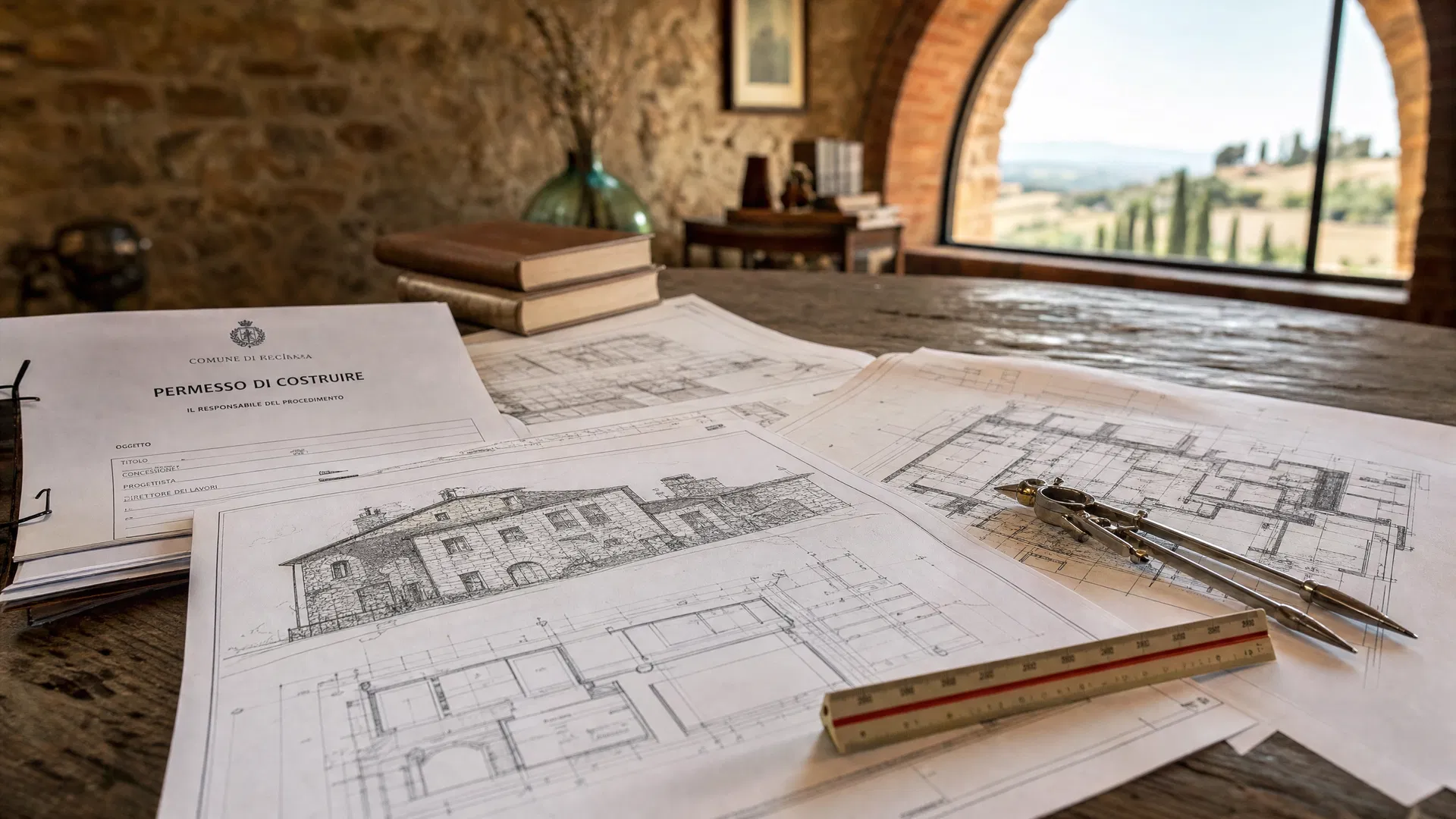
This is the most important and most complex check. You need to reconstruct the property's building history and verify that every intervention was authorised.

What to check:

  • Does an original building permit exist?
  • Were all subsequent interventions authorised (SCIA, CILA, Permesso)?
  • Does the current state match the last building permit?
  • Are there building amnesties (condoni)? Were they completed?
  • Was the habitability certificate issued?

Where to find information: Municipal Technical Office (access to records).

Warning signs: missing original permit, requested but uncompleted amnesties, discrepancies between actual state and last approved project. Read our permits guide to understand the consequences.

Phase 2: On-site technical checks

Structural survey

A structural engineer must assess the condition of load-bearing structures: foundations, load-bearing walls, floors, roof.

What to check:

  • Presence and condition of foundations
  • Cracks in load-bearing walls (fissures, settlement, out of plumb)
  • Floor condition (deflection, deformation, infiltration signs)
  • Roof condition (structure, covering, waterproofing)
  • Signs of rising damp or water infiltration

Tools: visual inspection, possible pacometer investigation, material testing, geotechnical surveys if necessary.

Warning signs: through-cracks in load-bearing walls, excessive floor deflection, signs of foundation settlement, roof with compromised structure.

Existing systems check

If the property has existing systems, checking their condition can reveal hidden costs.

What to check:

  • Electrical system: installation year, compliance, cable size
  • Plumbing: pipe material (lead = mandatory replacement), condition
  • Heating: type, age, efficiency, boiler/radiator condition
  • Drainage: type (septic tank, mains connection), condition, compliance

Warning signs: pre-1990 electrical system without compliance certificate, lead pipes, non-compliant septic tank, no drainage connection.

Asbestos check

In properties built or renovated between 1960 and 1992, asbestos-containing materials may be present: eternit roofing, flue pipes, insulation, vinyl-asbestos flooring.

What to check:

  • Roofing: is it eternit (fibre cement)?
  • Flue pipes: are they fibre cement?
  • Insulation: are there suspicious materials on pipes or boilers?
  • Flooring: are there vinyl-asbestos tiles (typical of the 1960s-70s)?

Removal cost: €25-€50/sqm for roofing, €3,000-€8,000 for flue pipes, €5,000-€15,000 for insulation.

Phase 3: Planning and restriction checks

Landscape restriction

What to check:

  • Does the property fall within a restricted area (D.Lgs. 42/2004)?
  • Which interventions are permissible without landscape authorisation?
  • Which materials and colours are prescribed?
  • Are there height, volume or footprint limits?

Where to find information: Regional Landscape Plan, Municipal Structural Plan, local Soprintendenza.

Hydrogeological restriction

What to check:

  • Does the property fall within a landslide risk area (PAI)?
  • Does the property fall within a flood risk area?
  • Are there limitations on interventions in restricted areas?

Where to find information: Basin Authority, Genio Civile, regional PAI mapping.

Warning signs: R3 or R4 area (high or very high risk) = interventions severely limited or impossible.

Use designation and planning zone

What to check:

  • What is the property's current use designation?
  • Is it compatible with intended use (residence, B&B, agriturismo)?
  • Is change of use permitted by the Local Plan?
  • What are the planning indices for the zone (maximum volume, height, distances)?

Where to find information: General Regulatory Plan or Municipal Operative Plan, planning destination certificate.

Phase 4: Economic and fiscal checks

Post-renovation value estimate

Before purchasing, it's essential to estimate the property's value after completion to verify the investment makes economic sense.

Basic formula: Post-renovation value > Purchase price + Renovation cost + Ancillary costs + Safety margin (15-20%)

Sources for estimate: Real Estate Market Observatory (OMI) of the Agenzia delle Entrate, market comparables, independent surveyor valuation.

Fiscal verification

What to check:

  • Have IMU and TASI been regularly paid?
  • Are there outstanding condominium debts?
  • Is the property subject to pre-emption rights (e.g., listed properties)?
  • Are there undeclared active or passive easements?

Summary checklist

  1. Updated cadastral survey
  2. Cadastral floor plan matching actual state
  3. Mortgage search for the last 20 years
  4. Access to records at the Municipality (building permits)
  5. Planning compliance verification
  6. Cadastral compliance verification
  7. Habitability/usability certificate
  8. Structural survey with technician
  9. Existing systems check
  10. Asbestos check
  11. Landscape restriction check
  12. Hydrogeological restriction check
  13. Use designation and planning zone check
  14. Post-renovation value estimate
  15. Fiscal and condominium situation check

How much does complete due diligence cost

Complete technical due diligence costs between €3,000 and €8,000, depending on the property's complexity and location. It includes site visit, access to records, cadastral and mortgage checks, technical report with risk assessment.

It's an investment that can save you tens of thousands of euros by avoiding the purchase of a problematic property or allowing you to negotiate the price based on issues found.

The MANINI method for due diligence

MANINI EXTRA offers a complete technical due diligence service as the first step in the project management process. Our report includes:

  • Complete documentary verification (cadastre, mortgages, building permits)
  • Technical site visit with structural assessment
  • Restriction analysis and feasibility of planned intervention
  • Preliminary renovation cost estimate
  • Risk assessment with classification (low/medium/high)
  • Operational recommendations (proceed, negotiate, withdraw)

The report is delivered before signing the preliminary contract, giving the client all the information needed to make an informed decision.


Considering buying a property to renovate in Tuscany? Our team can carry out complete technical due diligence and provide you with a clear report before any commitment.

Frequently Asked Questions

How much does technical due diligence cost in Italy?

Complete due diligence costs between €3,000 and €8,000, depending on property complexity. It includes site visit, access to records, cadastral and mortgage checks, and technical report with risk assessment.

What happens if I buy a property with building violations in Italy?

Responsibility for violations passes to the buyer. You'll need to regularise discrepancies at your expense (€5,000-€50,000+), and meanwhile you cannot obtain permits for new works. In extreme cases, you may need to demolish illegal parts.

How to check if a property has mortgages in Italy?

Through a mortgage search (visura ipotecaria) at the Land Registry (Conservatoria dei Registri Immobiliari). The search reveals mortgages, seizures, sequestrations and the complete chain of ownership transfers for the last 20 years.

What does planning and cadastral compliance mean?

It means the property's current state matches both the floor plan filed at the Catasto and the building permits issued by the Municipality. Without compliance, the notary can refuse to complete the sale.

Related Articles