Costs & Budget

How Much Does It Really Cost to Renovate a Farmhouse in Tuscany? Complete 2026 Guide

Leopoldo Manini - Founder MANINI® — — 18 min read

How Much Does It Really Cost to Renovate a Farmhouse in Tuscany? Complete 2026 Guide

Introduction

Anyone looking for a farmhouse to renovate in Tuscany asks the same question: how much will it really cost? The honest answer is that it depends on many variables, but there are realistic cost ranges that allow you to plan a credible budget.

In this article we analyse the real costs of a complete renovation, based on direct experience managing construction sites in the provinces of Siena, Grosseto, Arezzo and Florence. You won't find generic figures from property portals here, but concrete data updated to 2026.

If you're also evaluating the bureaucratic side, read our guide to renovation permits in Italy.

Cost per square metre: realistic ranges

The renovation cost of a Tuscan farmhouse varies depending on the property's condition, the complexity of the work and the desired finish level. Here are the three main ranges we encounter in our projects.

Essential conservative restoration: €1,200–€1,800/sqm. Includes structural consolidation, new systems (electrical, plumbing, heating), plaster, terracotta floors, new windows and good quality finishes. Suitable for farmhouses in reasonable condition that don't require radical structural intervention. These are typically properties that are already habitable but dated, with systems to replace and finishes to update.

Complete renovation, good standard: €1,800–€2,800/sqm. Includes everything above plus major structural work (roof, floors, foundations), thermal insulation, photovoltaic system, basic home automation, premium finishes (travertine, solid wood, local stone). This is the most common range for foreign buyers who want a farmhouse liveable year-round. It represents approximately 70% of the projects we manage.

Premium / luxury renovation: €2,800–€4,500/sqm. Complete intervention with selected materials, custom design, swimming pool, advanced home automation, Class A energy efficiency, external landscaping, architectural lighting. Suitable for those wanting a magazine-worthy property or a high-end holiday rental investment. Often includes guest house, wine cellar, and wellness area.

The cost items nobody tells you about

Beyond the per-square-metre cost of construction work, there are items that many foreign buyers underestimate. Knowing them before purchase is essential to avoid surprises — a topic we explore in depth in our article on the 10 most common mistakes.

Urbanisation charges (oneri di urbanizzazione): contributions to the Municipality ranging from €50 to €150/sqm depending on the type of intervention and location. If there's a change of use (from agricultural to residential), these can increase significantly up to €200-300/sqm.

Mandatory professionals: architect, structural engineer, geologist, thermal engineer, safety coordinator, site director. Together they represent 10-15% of construction costs. They are not optional: Italian law requires them. For a €500,000 project, that means €50,000-€75,000 in professional fees.

Utility connections: bringing water, sewage, electricity and gas to an isolated farmhouse can cost from €15,000 to €60,000, depending on distance from existing networks. In rural areas of Val d'Orcia or Maremma, where farmhouses can be 2-3 km from the main road, this item can have a major impact.

Furnishings: often forgotten in the initial budget, they represent €500–€1,500/sqm for complete quality furnishing. For a 250 sqm farmhouse, that means an additional €125,000-€375,000.

Banking and notary costs: if purchasing with a mortgage, add 2-3% of the property value for survey, processing, notary and registration taxes. For a €400,000 purchase, approximately €8,000-€12,000.

VAT on works: VAT on renovations is 10% (not 22%) if the property is designated as a primary residence. If it's a second home, VAT remains at 10% on works but 22% on furnishings and fittings.

Real example: 250 sqm farmhouse in Val d'Orcia

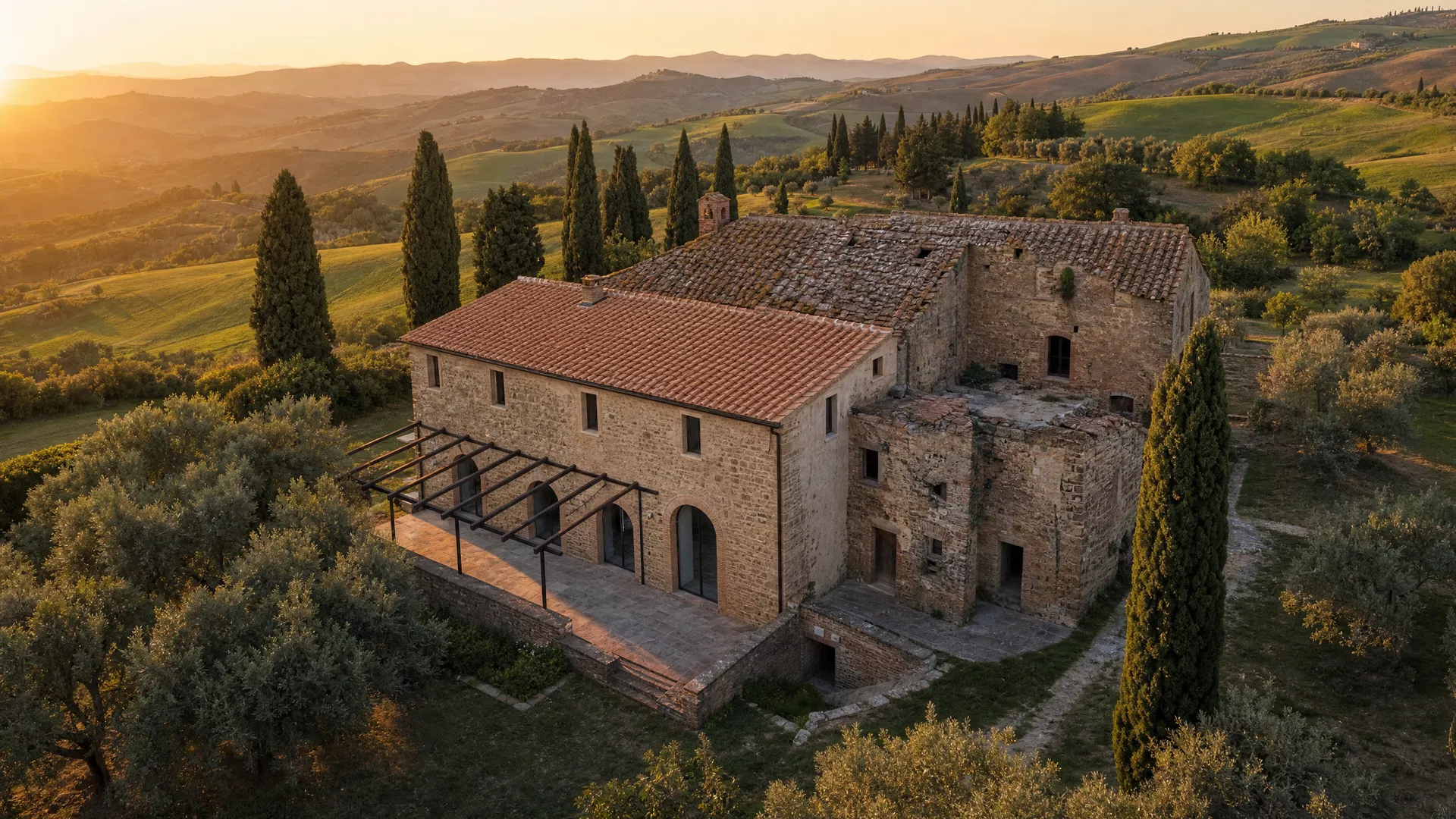
To give a real reference, here's the breakdown of a typical intervention on a 250 sqm farmhouse in Val d'Orcia, purchased for €400,000 and completely renovated:

  • Structure and consolidation: €180,000
  • Systems (electrical, plumbing, heating, mechanical ventilation): €95,000
  • Internal finishes (floors, wall coverings, plaster, painting): €120,000
  • Windows and doors: €45,000
  • Exteriors, garden, fencing: €60,000
  • Swimming pool 12x5m with plant room: €75,000
  • Professionals and permits: €85,000
  • Contingency and variations (10%): €65,000
  • Total renovation: €725,000 (€2,900/sqm)
  • Total investment (purchase + renovation): €1,125,000

This farmhouse, once completed, has an estimated market value between €1,400,000 and €1,600,000. The potential capital gain exists, but must be considered net of taxes, time and construction risks.

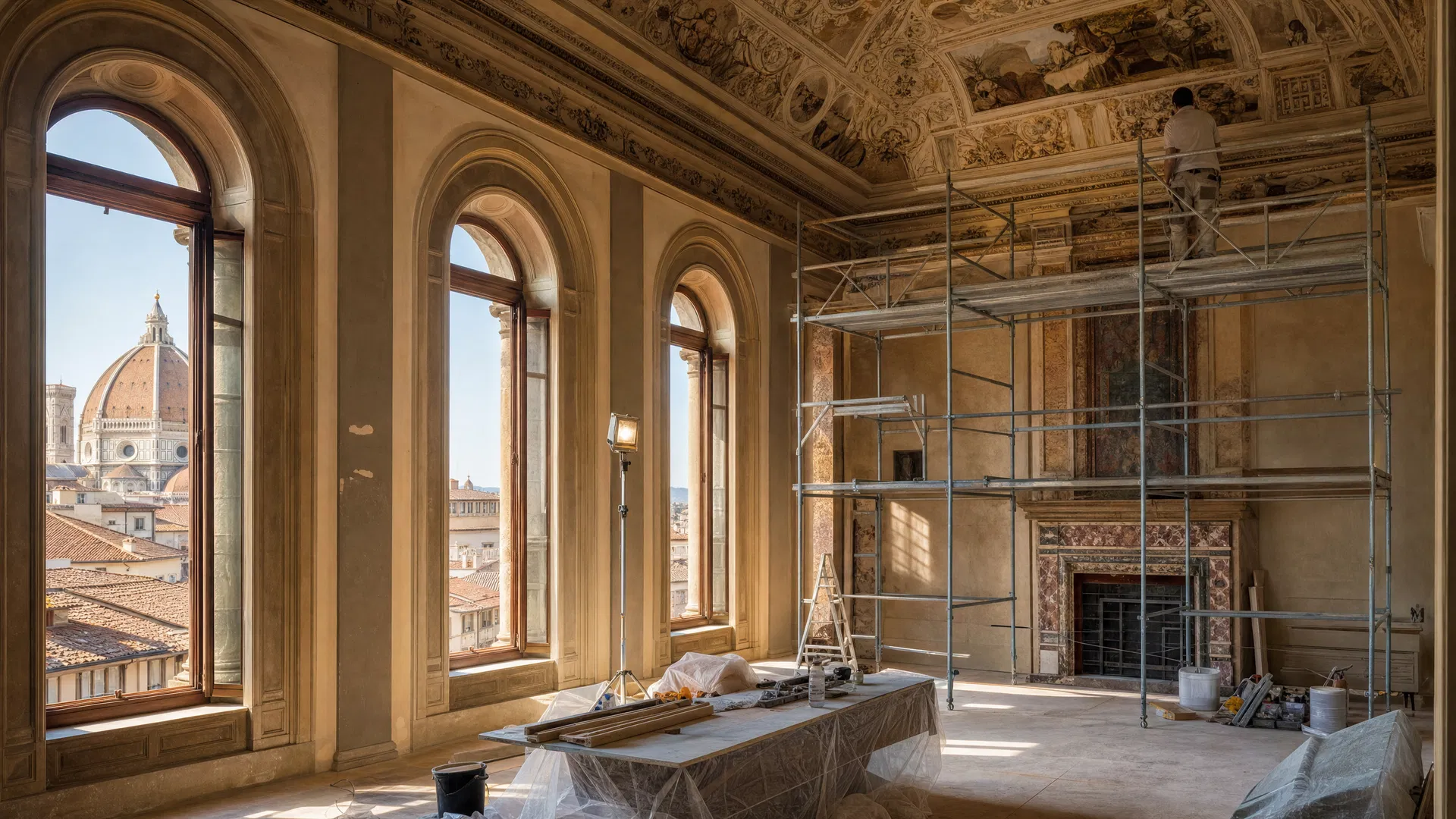
Second example: 120 sqm apartment in Siena historic centre

Not all projects involve rural farmhouses. Here's an urban example:

  • Internal demolition and disposal: €18,000
  • Complete systems: €42,000
  • Finishes (recovered original terracotta, lime plaster, wood): €55,000
  • Custom windows (Soprintendenza requirement): €28,000
  • Professionals and permits: €25,000
  • Contingency: €15,000
  • Total: €183,000 (€1,525/sqm)

In historic centres, unit costs are often lower because there are no exteriors, pool or utility connections to deal with. But Soprintendenza restrictions can slow timelines and mandate specific materials.

Realistic timelines

A complete intervention on a 200-300 sqm farmhouse typically requires:

  • Design and permits: 4-8 months
  • Construction: 10-16 months
  • Finishes and inspections: 2-3 months
  • Total: 16-27 months from purchase to handover

Timelines extend if the property is listed (Soprintendenza approval required), if it's in seismic zone 2 (more complex structural design) or if there are variations during construction.

For those managing the project from abroad, timelines tend to increase by 20-30% due to communication and decision-making difficulties. Read our article on remote project management to understand how to mitigate this risk.

Factors that influence the final cost

Site accessibility: a farmhouse reachable only by narrow white road requires smaller vehicles, more trips, more time. Estimated additional cost: 5-10%.

Foundation condition: if the farmhouse lacks adequate foundations (common in pre-1950 buildings), consolidation with micropiles or underpinning can cost an additional €30,000-€80,000.

Asbestos presence: removal of asbestos cement roofing costs €25-€50/sqm of covered surface, plus disposal at authorised landfill.

Landscape restrictions: in protected areas (almost all rural Tuscany), timelines extend by 3-6 months for landscape authorisation and materials must be consistent with the context.

Seasonality: construction sites in Tuscany slow significantly between November and February due to weather conditions. Planning work to start in spring optimises timelines.

How to protect yourself from cost overruns

The main cause of budget overruns is the lack of a detailed executive project before work begins. Without a precise bill of quantities, every decision made on site becomes a variation — and variations always cost more.

The second mistake is not having a site director independent from the construction company. Whoever controls the work cannot be the one executing it. This conflict of interest is the number one cause of poorly executed work and inflated costs.

The third mistake is trusting quotes that are too low. A quote of €1,000/sqm for a complete renovation in Tuscany in 2026 is not realistic: either items are missing, quality will be insufficient, or there will be variations during construction.

Practical rule: if the lowest quote is more than 30% below the average of the others, it almost certainly hides problems.

Tax incentives available in 2026

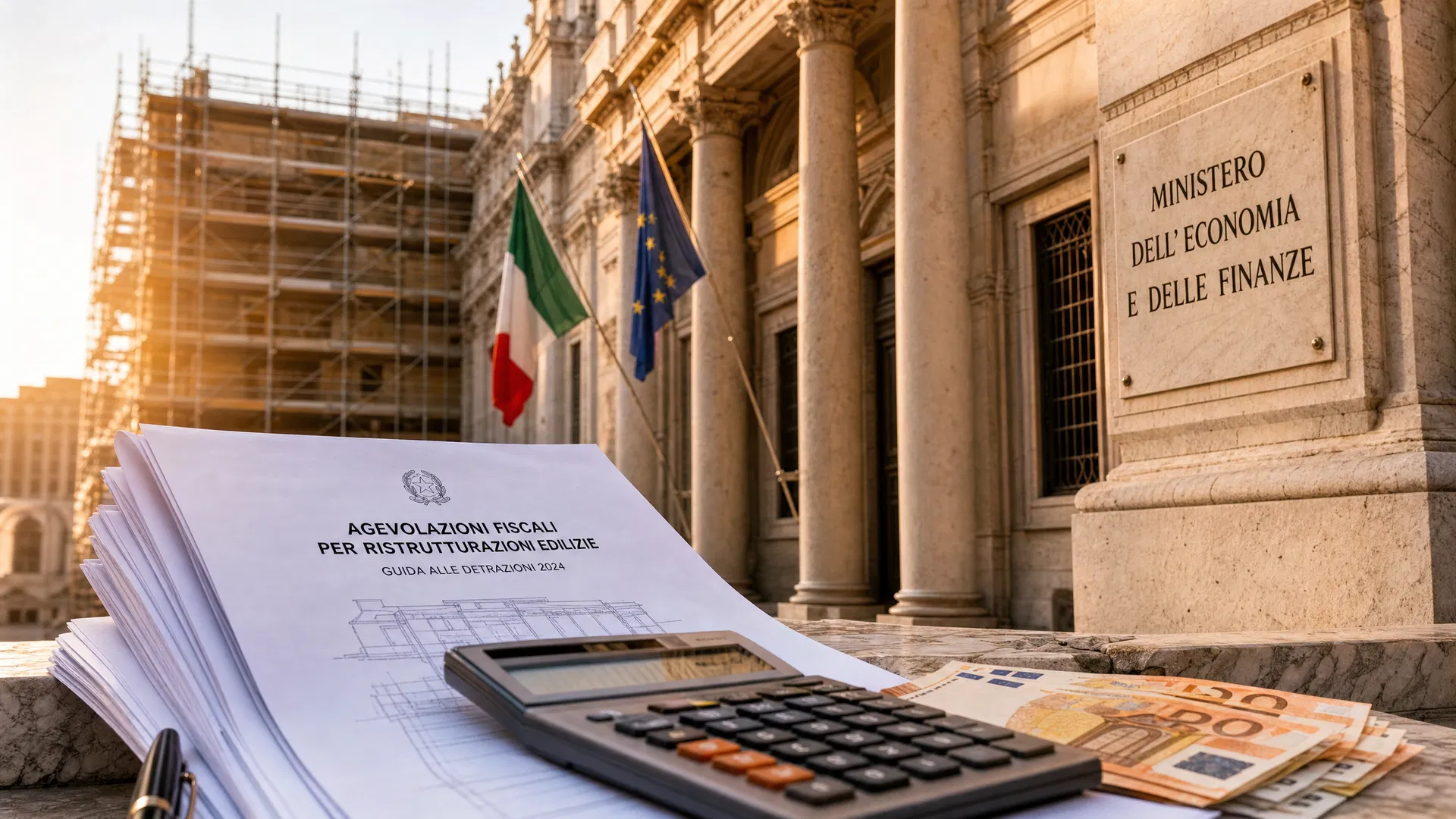
Renovation bonus 50%: IRPEF deduction of 50% on a maximum of €96,000 expenditure per property unit, spread over 10 years. Valid for extraordinary maintenance, restoration and conservative renovation.

Ecobonus 65%: for energy efficiency interventions (thermal insulation, windows, condensing boiler, heat pump). 65% deduction on variable maximums by intervention type.

Sismabonus: for seismic improvement in zones 1, 2 and 3. Deduction from 50% to 85% depending on the seismic class improvement achieved.

Note: these incentives are subject to annual changes in the Budget Law. Always verify current regulations at the time of intervention.

The MANINI method

MANINI EXTRA manages premium renovations with an integrated project management approach: a single point of contact coordinates design, permits, construction, suppliers, variations, timelines and costs. The client receives periodic reports, has direct access to the site and approves every significant decision before it's executed.

This method doesn't eliminate surprises — they always exist in construction — but it manages them transparently, with clear responsibilities and no surprises on the final bill.

Before starting any project, we carry out complete technical due diligence on the property to identify hidden risks and estimate costs with precision.


If you're considering buying a farmhouse to renovate in Tuscany and want a realistic cost analysis before committing, request a consultation with our team.

Frequently Asked Questions

How much does it cost to renovate a farmhouse in Tuscany per square metre?

Costs range from €1,200/sqm for essential conservative restoration to €4,500/sqm for a complete luxury intervention. The most common range for foreign buyers is €1,800-€2,800/sqm.

How long does it take to renovate a farmhouse in Tuscany?

A complete intervention on a 200-300 sqm farmhouse typically requires 16-27 months from purchase to handover, including 4-8 months for design and permits and 10-16 months of construction.

What are the hidden costs of renovating in Tuscany?

Often underestimated costs include: mandatory professionals (10-15% of works), urbanisation charges (€50-200/sqm), utility connections (€15,000-€60,000), furnishings (€500-€1,500/sqm) and VAT.

Are there tax incentives for renovating in Italy in 2026?

Yes: 50% Renovation Bonus (max €96,000), 65% Ecobonus for energy efficiency, and 50-85% Sismabonus for seismic improvement. Always verify current regulations.

Related Articles